tag:carriermedal.nd.edu,2005:/newstag:carriermedal.nd.edu,2005:/latestThe Carrier Medal | News2026-08-03T16:45:00-04:00The Carrier Medal honors sustained, outstanding achievements in the sciences, awarded by Notre Dame's College of Science.tag:carriermedal.nd.edu,2005:News/1836552026-08-03T16:45:00-04:002026-08-04T12:07:52-04:00Nobel Prizewinner in Chemistry to speak on pioneering work in developing new enzymes
The University of Notre Dame Carrier Medalist for 2026, Frances H. Arnold, will share her lecture, “Innovation by Evolution,” on Monday, Sept. 14 in Jordan Hall of Science.
One of the recipients of the 2018 Nobel Prize in Chemistry, Arnold is the Linus Pauling Professor of Chemical Engineering, Bioengineering and Biochemistry at the California Institute of Technology. She won the Nobel Prize for pioneering "directed evolution" to engineer new enzymes, which are proteins that speed up chemical processes. Her work has helped develop “green” pharmaceutical manufacturing and has made renewable fuels possible.
Arnold’s talk for The Rev. Joseph Carrier, C.S.C., Science Medal, presented in honor of Mary Burke Ryan, will share recent studies from her laboratory that show how directed evolution of enzymes can teach biology to carry out entirely new chemistry.
“Biology can learn to do chemistry invented by human beings much more efficiently and without the toxic components humans use,” she said. “And even more exciting, biology can learn to do chemistry that humans dream of but cannot yet do.
“These include transformations used to make important products we need in our daily lives.”
A precocious child who grew up with four brothers, Arnold knew she was as good at math, if not better, than them. She graduated magna cum laude from Princeton University with a degree in mechanical and aerospace engineering, though she took a wide variety of classes in different areas before settling into her major.
After a job at the former Solar Energy Research Institute in Colorado (now the National Laboratory of the Rockies), and plenty of world travel, Arnold completed her doctoral degree in chemical engineering at the University of California-Berkeley. She credits having four brothers with cementing her lack of fear of working with men, which is something she needed in the 1970s and early 1980s when completing her degree and landing that first engineering job.
Even in 2026, many women shy away from engineering and some areas of science.
“Women often choose not to do it,” she said. “To change what they choose, you have to make it interesting; you have to make it impactful for people and planet. It has to compete with the many other things women find interesting.
“Because when they do it, they succeed very well.”
Throughout her career, Arnold has turned her attention toward specific applications of her work that are best done by industry, several times encouraging students and postdocs to start companies. Today half of her research group is working with artificial intelligence, and she and her students were pioneers in the use of machine learning for engineering proteins.
Prizes like the Carrier Medal allow young people to see what it might be like to be a scientist or engineer, and could move them to consider a future STEM career, Arnold said.
“The Nobel Prizes, for example, inspire young people in the farthest reaches of the world, she said. “I get letters from students in sub-Saharan Africa, Egypt, Indonesia, South America who say that it’s exciting and inspiring to see a woman win a Nobel Prize.
“For example, non-scientists might not realize their cell phones, or even their laundry detergents, are full of clever inventions, and awarding prizes reminds them that these were thought up by humans.
“Awards sometimes reach even more people than a science classroom,” she said.
The Carrier Medal, is awarded annually in recognition of sustained, outstanding achievements in the sciences. It celebrates those whose pioneering contributions have advanced the frontiers of scientific knowledge and promoted the betterment of humanity.
]]>
Deanna Csomo Ferrelltag:carriermedal.nd.edu,2005:News/1750572025-09-18T10:39:00-04:002025-09-18T10:39:47-04:00James Maynard highlights the power of prime numbers in Carrier Medal Lecture
Fields medalist and number theorist James Maynard, professor of number theory at the Mathematical Institute in Oxford, described the fundamental role of prime numbers at the 2025 Carrier Medal Ceremony and Lecture at the University of Notre Dame in September.
A prime number is a whole number larger than 1 that cannot be written as two smaller whole numbers multiplied together. Therefore, 15 is not prime because it can be divided in whole numbers by 3 and 5. However, 7 is a prime number because it can only be divided by 7 and 1.
“The natural question is, why on earth should you care about prime numbers? This looks like some esoteric thing that maybe math nerds would like, but wouldn't have any relevance,” he joked.
Maynard drew comparisons between primes and the building blocks used in other scientific disciplines. Chemists look at atoms to understand molecules, and geneticists look at DNA base pairs to understand heredity, he said. Similarly, mathematicians look at primes to understand the multiplicative structure of whole numbers.
One reason they are crucial is because they provide insight into how mathematicians think about complex systems, since many whole numbers can be broken down into prime factors in a unique way, a concept formalized in the fundamental theorem of arithmetic, he said.
“If you're trying to understand something that's big and complicated, [the principle] is to break it down into much simpler constituent pieces and then try and build your understanding up from there,” said Maynard, who won the Fields Medal, one of the most prestigious honors in mathematics, in 2022.
One common use for prime numbers involves internet security and online shopping.
“Every day now we're using the internet, and I might try and buy something on Amazon. Maybe I'll try to buy a maths book or something . . . so that's the sort of thing that I buy,” he said, and the crowd laughed. “But when I'm buying my math book, I'm going to give my credit card details, and I want to make sure my credit card details are secure, so a hacker can't steal my credit card details and use them to buy themselves lots of math books.”
The encryption used relies on multiplying large prime numbers together to create an even larger number for the “public key,” which scrambles the credit card number during the encryption process. To decrypt it, however, one must have the two original primes, which are quite difficult to factor out, even by a supercomputer.
After Maynard’s talk, he and Kate Biberdorf, the Professor for Public Understanding of Science, had a fireside chat where audience members could submit questions. Maynard answered questions ranging from how to prepare for a mathematics career beginning as young as middle school, to how to solve parts of important theorems, to how to describe the concept of “sexy primes.” (And no, they might not be what you think: They are prime numbers in a pair or larger group of primes that differ from each other by exactly six.)
The Rev. Joseph Carrier, C.S.C., Science Medal, presented in honor of Mary Burke Ryan, is awarded annually in recognition of sustained, outstanding achievements in the sciences. It celebrates those whose pioneering contributions have advanced the frontiers of scientific knowledge and promoted the betterment of humanity.
Established by the College of Science at the University of Notre Dame in 2022, the medal honors distinguished scientists whose work has transformed their disciplines and whose discoveries inspire future generations. The award rotates annually among the mathematical, physical, chemical, and biological sciences and is accompanied by a monetary prize.
Maynard’s medal was presented by Steve Corcelli, interim William K. Warren Foundation Dean of the College of Science, after introductory remarks by him and David Galvin, professor and chair of the Department of Mathematics.
“The fundamental reason that I think primes are so fascinating is that, on the one hand, primes are amongst the most basic objects that you could possibly think of … but then the big tension is that they remain mysterious,” Maynard said. “Quite quickly, even when you're asking basic questions about primes, you are into famous problems that mathematicians have been suffering to solve for 1000s of years.”
]]>
Deanna Csomo Ferrelltag:carriermedal.nd.edu,2005:News/1742962025-08-12T14:40:00-04:002025-08-12T14:40:38-04:00Prime Time: Fields Medalist James Maynard tackles number theory with bold, creative proofs
When James Maynard was a child, he didn’t feel a singular, driving force toward studying mathematics, even though he liked the subject.
Of course, he had his phases: Dinosaurs. Tractors. LEGO. Maynard, who was one of four recipients of the 2022 Fields Medal — a top international award for mathematicians under the age of 40 — says he’s always “enjoyed what I enjoy and didn’t enjoy what I didn’t enjoy, and I just focus on those things that I like.”
As an adult, that means mathematics.
Maynard, a research professor at the University of Oxford, is the 2025 recipient of the Rev. Joseph Carrier, C.S.C., Science Medal at the University of Notre Dame, an award given in recognition of sustained, outstanding achievements in the sciences. He will accept the medal and give a public presentation in Jordan Hall on Monday, Sept. 15.
His primary area of interest within mathematics is in a field called number theory. At its most basic, number theory is the study of whole numbers and the relationships between them. It explores patterns, like how prime numbers are distributed, or how numbers can be divided evenly.
Let’s go back to fourth or fifth grade: Prime numbers are those greater than 1 that cannot be divided by any whole number other than itself and 1. They are fundamental objects in mathematics, and though they’re introduced to young children, they are also completely mysterious. Full understanding of prime numbers has resisted the efforts of mathematicians studying them for thousands of years.
In March, Maynard shared the significance of understanding prime numbers, as well as the history of the field, during the inaugural public talk of the Pittsburgh Mathematical Horizons Lecture Series, sponsored by the Benter Foundation at the University of Pittsburgh.
“Why care about primes?” he asked, dressed in a white oxford and khaki pants — a variation of what the mathematics community jokes is his usual “uniform”: a white button-down oxford and jeans. “This may seem like some weird, geeky thing to study.”
Though it may seem abstract, understanding prime numbers plays a key role in computer security and encryption, as well as within digital communications. The key reason is that primes are easy to multiply together, but difficult to pull apart. Encryption works by multiplying prime numbers, which is easy for a computer to do. However, to break the encryption, a hacker (or a hacker’s computer) would need to figure out the two original prime numbers using factoring, which is difficult even for mainframe computers.
Maynard’s first major breakthrough, and a key part of why he was awarded the Fields Medal, addressed a problem that had intrigued mathematicians for centuries: How close together can prime numbers come to each other? This touches on mathematics’ famous twin prime conjecture, which posits that there are infinitely many pairs of primes that differ by exactly two—like 11 and 13.
Working on solving this question was almost an obsession, or at minimum, a quiet compulsion for him. When he’s doing research, he says he needs to get back to that level of obsession he had with his favorite subjects as a child (“if it was that I was very into tractors, then I would live and breathe tractors,” he said). He lived and breathed the twin prime conjecture proof, physically immersing himself in the problem using both pen and paper and computers, and stacking scraps of paper on top of notes in his office, where he tries to eliminate all other distractions. He brings his smartphone into the room with him, but once he’s focused on math problems, it becomes irrelevant.
“It’s the combination of feeling that these are really inherently important fundamental objects, but still we don’t understand them, that’s mind-blowing for me,” he said. “We know as you go further and further down the number line, the primes get rarer and rarer.
“But we believe, and can now prove, that occasionally you get primes which come unusually close together.”
Though some questions remain unanswered, Maynard proved in November 2013 that there are infinitely many pairs of prime numbers that are at most 600 numbers apart.
“From the mathematician’s point of view, it was the new method that was the exciting thing,” Maynard said.
As he pointed out, 600 still sounds like a wide gap, but it’s really not: Mathematician Yitang Zhang, who earned his bachelor’s and master’s degrees from Peking University and his doctorate from Purdue University, had shown in April 2013 that some prime numbers are at most 70 million units apart. That result was the first time any mathematician had proven that there was any fixed gap between prime numbers that occurred an infinite number of times.
Remarkably, Maynard didn’t know that Zhang had been working on the same problem at about the same time, using different methods. Zhang used an advanced filtering technique, called a sieve, and deep number theoretical tools to arrive at his solution. It was a powerful solution, but complex and not easy to adapt to other situations.
Maynard’s result seven months later used a new type of sieve that was much easier to use. He essentially invented a new type of filter that didn’t just search for pairs of primes, but also for triplets, quadruplets, or even more.
Though some in the field wondered if Maynard was competing with Zhang, he firmly rejected the idea of competition.
“People like to talk about competition in mathematics, but I don’t think of it that way,” he said. “We’re all trying to understand the same things. It’s more like a shared journey than a race.”
It’s a journey that those in the field enjoy, and what keeps them searching for answers. Still, Maynard stands out, said Roger Heath-Brown, emeritus professor of pure mathematics at the Mathematical Institute at Oxford University. Any good mathematician should be a master of a good range of techniques; they may need to be highly competent computationally. And they have to put a lot of hard work into their research, Heath-Brown said.
“James scores exceptionally highly on all these counts. In addition, he thinks deeply and clearly about his mathematics. That clarity of thought is evident from his writing, where technical details appear to be handled with ease,” he said. “But most of all, it is his ability to bring radical new ideas to his mathematics that makes him a star.”
The biggest question in math: Proving the Riemann Hypothesis
Maynard has more recently turned his attention to the Riemann Hypothesis, which lies at the heart of prime number theory. It’s based on a mathematical object called the Riemann zeta function, which is similar to a complicated machine that outputs numbers based on inputs, and functions like a map that shows a mathematician where prime numbers are hiding.
The 165-year-old hypothesis says that all of the of the interesting “zero points” of the zeta function, or where the function equals zero, lie along a perfectly straight vertical line, called the critical line, in a complex number system. The Riemann zeta function has been rigorously studied and many of its properties proven; the Riemann Hypothesis, specifically regarding where the function equals zero, has not. But mathematicians agree that it can be proven.
“This is the most important problem in the whole of mathematics,” Maynard said. “We don’t quite have the right inroads to think about it, so we have to accept somewhat weak results in our attempts to try to understand it.”
The solution for the Riemann Hypothesis has high stakes: The Clay Mathematics Institute will reward the first mathematician (or group of mathematicians) $1 million to solve it. Maynard and Larry Guth, the Claude E. Shannon Professor of Mathematics at the Massachusetts Institute of Technology, published a proof in 2024 that provides better estimates of how many prime numbers exist on short intervals in a small stretch of numbers, even far out on the number line.
They also determined a better estimate of how many “bad” zeros the zeta function might have off the critical line — where they shouldn’t be if the Riemann Hypothesis is true. Their solution provides better ways to control when certain number theory formulas are unusually large, and helps mathematicians better understand the behavior of prime numbers and the zeta function.
Despite making some headway, Maynard compares proving the hypothesis to a “massive mountain” for which mathematicians don’t have the tools to climb.
“So we have to content ourselves with finding paths around the mountain,” he said.
Mathematics: Path to stardom?
Maynard may do most of his work in a silent office, but that doesn’t mean he’s a brilliant loner. He’s friendly, willing to share knowledge, and self-effacing. These qualities make him easily approachable.
“In addition to being brilliant and extremely creative, he is a very generous person and very open to collaboration,” said Kevin Ford, professor of mathematics at the University of Illinois Urbana-Champaign. “He is an elite mathematician who is not elitist, and has shared many of his ideas with students and post-doctoral workers.
And so people recognize him, and this is something Maynard says he’s been particularly surprised about. One time a mathematics fan recognized Maynard when he was at dinner with his parents. While Maynard was visiting the University of Pittsburgh campus, Isabella Canals, a senior majoring in economics and mathematics, noticed him outside and stopped to ask if he was “that mathematician” giving an upcoming lecture, which she did attend.
“It’s still very weird for me,” he said. “I have to pinch myself sometimes when people stop me on the street to ask for a photo.
“I still find it a bit surprising, weird and like lots of fun, but definitely, completely not what I was expecting when I imagined my career as a mathematician: having interviews, having people stop for photos, suddenly being this person that people want to listen to in some ways.”
Though Maynard admits that receiving accolades like the Fields Medal, or being chosen to present lectures and other awards, like Notre Dame’s Carrier Medal, feels amazing, he truly does not think about awards while doing his research. It’s about mathematics, about teasing out the possibilities of what he considers a fascinating problem.
The prizes have made him recognizable, but thinking about them is not in the spirit of the award.
“The worst way to prove a great theorem is to wake up and say, okay, today I’m going to prove a great theorem,” he said.
But prizes are significant for making the public aware of the importance of science, Maynard said. He thinks back to his childhood and understanding that major prizes, like the Nobel prizes or the Fields Medal, demonstrate the type of work that is highly important, and worth funding and supporting. High-profile prizes have been quite successful at putting serious research problems in the consciousness of the public, he said.
“I think awards ... can be these really clear signifiers of, ‘here's some academia coming together and saying, here's some really great results,’” he said. “It's a very strong signal to young people and to the wider public, that this is what real science is.”
It’s not always about mathematics
Though Maynard enjoys spending his time chipping away at some of his field’s most pressing questions, he likes to balance work with family and fun.
Among his favorite hobbies?
“I again have sort of geeky obsessions: photography and coffee,” he said and chuckled. His photography is more about process than product, and he tends to keep the finished product to himself, even as he enjoys finding creative angles for his photographs.
“I try and come up with sort of artistic ways of focusing on small details or unusual perspectives, rather than just the sort of standard photo of the big cathedral,” he said.
Modern art is another passion, and he’s drawn to abstract impressionism, particularly by Jackson Pollack, and surrealism from the middle of the 20th century, starting with Salvadore Dali.
Outside the world of prime numbers and proofs, Maynard keeps up with his two children, ages 3 and 1, with his partner Eleanor Grant, a physician.
They are his focus in his “off” time, and his family sometimes travels with him. While in Pittsburgh, for instance, he visited the Carnegie Museums of Natural History, where his son enjoyed peering at the dinosaur skeletons.
Accolades aside, Maynard is grounded by his family life, his colleagues shared.
“When he received his Fields Medal, he remarked to me that it was a really important event in his life, but it was only the second most important event taking place that week; two days later his first child was born,” Ford said.
Originally published by Deanna Csomo Ferrell at science.nd.edu on August 12, 2025.
]]>
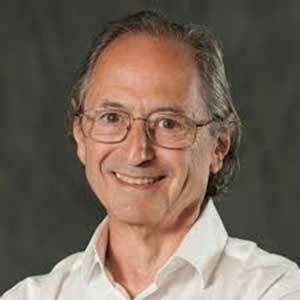
Deanna Csomo Ferrelltag:carriermedal.nd.edu,2005:News/1691902024-08-26T13:05:00-04:002025-01-10T14:46:19-05:00Nobel laureate Michael Levitt to receive the 2024 Carrier MedalMichael Levitt
Levitt won a Nobel Prize in chemistry in 2013, shared with Martin Karplus and Arieh Warshel, for developing the first method to calculate chemical reactions using computers — while integrating features of classical physical and quantum mechanics. Their work, the majority of which was performed in the 1970s, led to new insights into how proteins fold or misfold, and how enzymes catalyze. By looking at the structure of molecules, the trio revolutionized the field of biochemistry and research into the structural basis of diseases.
Levitt’s lecture will begin at 5:30 p.m. in the Dahnke Ballroom on the seventh floor of Duncan Student Center. He will focus on the fusion of the three types of intelligence: biological intelligence, human intelligence and artificial intelligence. His talk, titled, “Multidisciplinary Revolution in Biology and Artificial Intelligence,” will describe how AI and computational biology have revolutionized our approach to disease, making drug development faster and more cost-effective. Levitt will also underscore the critical role of multidisciplinary collaboration that will drive the next revolution in biology and AI.
Levitt, the Robert W. and Vivian K. Cahill Professor of Cancer Research at Stanford, said he was honored and pleasantly surprised to be named the 2024 Carrier Medal recipient.
“Usually, after the Nobel Prize, you don’t get prizes . . . and I was very complimented,” he said. “This is, I think, the largest American prize I have ever received, and I’m excited to come to Notre Dame to give my talk.”
Levitt started his career in computers during the 1960s when computers were as large as rooms. Born in Pretoria, South Africa, he earned his undergraduate degree in physics at King’s College in London, and his doctoral degree in computational biology from the University of Cambridge.
The framework behind computational structural biology began around the same time Levitt embarked on his research. His mentor at Cambridge, John Kendrew (who had won the Nobel Prize for Chemistry in 1962), requested that Levitt spend a year with Schneior Lifson, a professor of chemical physics at the Weizmann Institute in Rehovot, Israel, before beginning his doctoral program. Lifson had several theories about atomic interactions, but proving them required a computer.
“(Kendrew) wouldn’t accept me as a Ph.D. student until I went to Israel for a year, sort of like a gap year, and I didn’t understand why,” Levitt said. “But as a result, at the end of that first year in Israel, I was able to complete a computer model that would explain the energetics of a protein structure.”
During the research at the Weizmann Institute, Levitt, Karplus and Warshel combined their expertise to develop computer programs that could simulate the behavior of complex molecular systems. Creating hybrid models that integrated classical physics and quantum mechanics allowed them to describe chemical reactions in large molecules like proteins. Most of the work was finished by the time Levitt was 25.
Over time, Levitt became more and more fascinated with the field. But, “I was never somebody who had a five-year plan,” he said. He first became interested in science because of television. He watched television for the first time during a visit with his aunt and uncle in Great Britain. One program that caught his interest was a science show featuring Kendrew.
“I knew then that, basically, this is the person I wanted to do a Ph.D. with,” Levitt said.
That one television program led Levitt to science — highlighting the importance of continuing to make science “visible” even among today’s crowded choices. Given annually for sustained, outstanding achievements in any area of science, the Rev. Carrier Medal exemplifies one way to bring science to the public’s attention, Levitt said.
“We’ve always lived in a society of celebrities, and in some ways, it’s just a way to focus on a certain area: A sports celebrity probably makes young people keener about sports,” he said, adding that there can also be science celebrities. “If you look at how our society has changed as a result of science and technology, it’s important to actually encourage people to become scientists.”
Notre Dame’s award is named after Rev. Joseph Celestine Basile Carrier, C.S.C., who is recognized as the first director of the science program at the University in 1865, when the College of Science was established as a department.
Contact: Jessica Sieff, associate director of media relations, 574-631-3933, jsieff@nd.edu
Originally published by Deanna Csomo Ferrell at news.nd.edu on August 26, 2024.
]]>
Deanna Csomo Ferrelltag:carriermedal.nd.edu,2005:News/1691912023-10-13T10:00:00-04:002025-01-10T14:47:22-05:00Nobel Laureate Thomas Südhof to accept 2023 Rev. Carrier Medal
Dr. Thomas Südhof, one of the recipients for the 2013 Nobel Prize in Physiology or Medicine, could have launched his career in multiple directions.
Growing up in Germany in a family deeply entrenched in the Waldorf educational principles of experiential learning, Südhof, the recipient of the 2023 Rev. Joseph Carrier C.S.C. Science Medal from the University of Notre Dame College of Science, considered music (he formerly played the bassoon), philosophy, or history as more interesting prospects than medicine when he headed to college. In the end, he decided to follow in the footsteps of his parents, who were both physicians, but eventually made the switch to the laboratory. Südhof is currently Stanford University’s Avram Goldstein Professor Investigator, Howard Hughes Medical Institute, and serves as professor in the Department of Molecular & Cellular Physiology and of Neurosurgery as well as in the Department of Neurology & Neurological Sciences and of Psychiatry & Behavioral Science.
He will accept the Rev. Carrier Medal at 5 p.m. on Monday, Oct. 23 in the Dahnke Ballroom, on the seventh floor of the Duncan Student Center at Notre Dame Stadium. His lecture, “Toward a Cell Biology of Alzheimer’s Disease,” will describe his laboratory’s recent studies that illustrate how investigations into the cell biology of neurons and glia have the potential to provide insight into the molecular mechanisms of Alzheimer’s disease, and might lead to better therapies.
He had already attended medical school at the University of Göttingen in Germany before he realized that it might not be the right career for him. As someone who values listening to his inner voice above trends and in tandem with solid advice from mentors, he understood that he could help patients more as a scientist than as a doctor, and forged a path to the laboratory.
“When I was in medical school, it was a different time than nowadays when it is very structured, and people don’t have any freedom to do science because they don’t have time—they’re trained as medical super technicians more than as scientists,” he said. After completing his medical training, he decided to join the laboratory of the professionally inseparable duo of Michael S. Brown and Joseph L. Goldstein at the University of Texas Southwestern Medical School in Dallas.
While in their lab, Südhof focused on studying cholesterol. He cloned the gene encoding the receptor that binds to particles called low-density lipoproteins (LDLs), which are the primary carriers of cholesterol in the blood. Brown and Goldstein were awarded the Nobel Prize in Physiology or Medicine in 1985.
“I was extremely happy they got the award,” he said, when asked if their success inspired his own. “But there’s no question that this isn’t the reason to go into science—I didn’t go into science to win awards. That was not on my agenda, or thoughts, or whatever else.”
When it was time for him to go back to Germany to complete his medical training, Brown and Goldstein encouraged Südhof to change his mind and continue in laboratory science instead. He began his work on overarching neuroscience questions, switching away from the study of cholesterol.
“Brown and Goldstein had done such a great job with their research, figuring out how cholesterol is synthesized, and had performed tremendous work, translating that into human therapies that have changed lives,” he said. “There really was nothing I could add to that.”
His 2013 Nobel Prize was awarded for his work from the 1990s in which he studied sac-like structures, called vesicles, that transport substances to different places inside the cell and then send molecules from the cell’s surface as signals to other cells in the body. By studying brain cells from mice, he showed how vesicles are held in place, ready to release signal-bearing molecules at the right moment, according to the Nobel Prize website. He shared the prize that year with James E. Rothman and Randy W. Schekman.
Südhof’s broad research question now is to discover how synapses—the points between neurons and the parts in which neurons form contacts that permit and process information—are formed. He’s also researching how neurons “know” which other neurons to form synapses with for a healthy brain. What happens with neurons in diseases like Alzheimer’s disease? Synapses are the fundamental computational unit of the brain, and may hold the key, he described.
“What’s the benefit of being able to live longer because we are able to treat other diseases, while your brain goes basically kaput?” he asked. “If your brain is diseased, then you can’t use all the benefits of our enhanced survival.
“There has been very little funding for the brain; it’s an area that’s coming to the fore now more and more because people realize that it’s great to be able to live beyond the age of 90, but if your chance of getting Alzheimer’s disease is 50% beyond the age of 90, we need to learn how to deal with it.”
In a time when increased pressure and importance is placed on publishing a discovery in a high-impact scientific journal and collaborating with others with whom the scientist has little connection, Südhof suggests that it’s more important to have good teachers, excellent mentors and a scientifically stimulating environment to succeed as a scientist.
“The place one publishes isn’t ultimately important. Rather focus on the content of the study, what the data really says (not just the abstract). Then we can take pride and pleasure in work that reports and advances discoveries,” he wrote as part of his Nobel Prize acceptance.
Originally published by Deanna Csomo Ferrell at science.nd.edu on October 13, 2023.
]]>
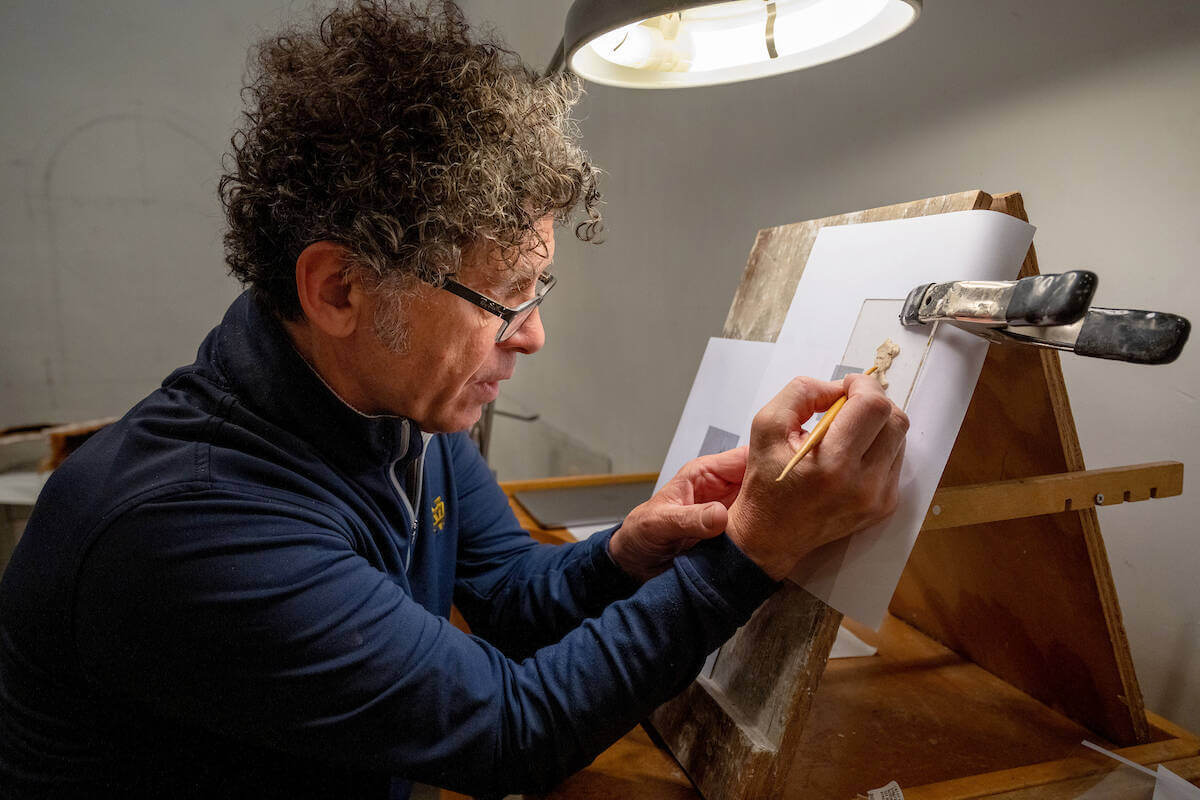
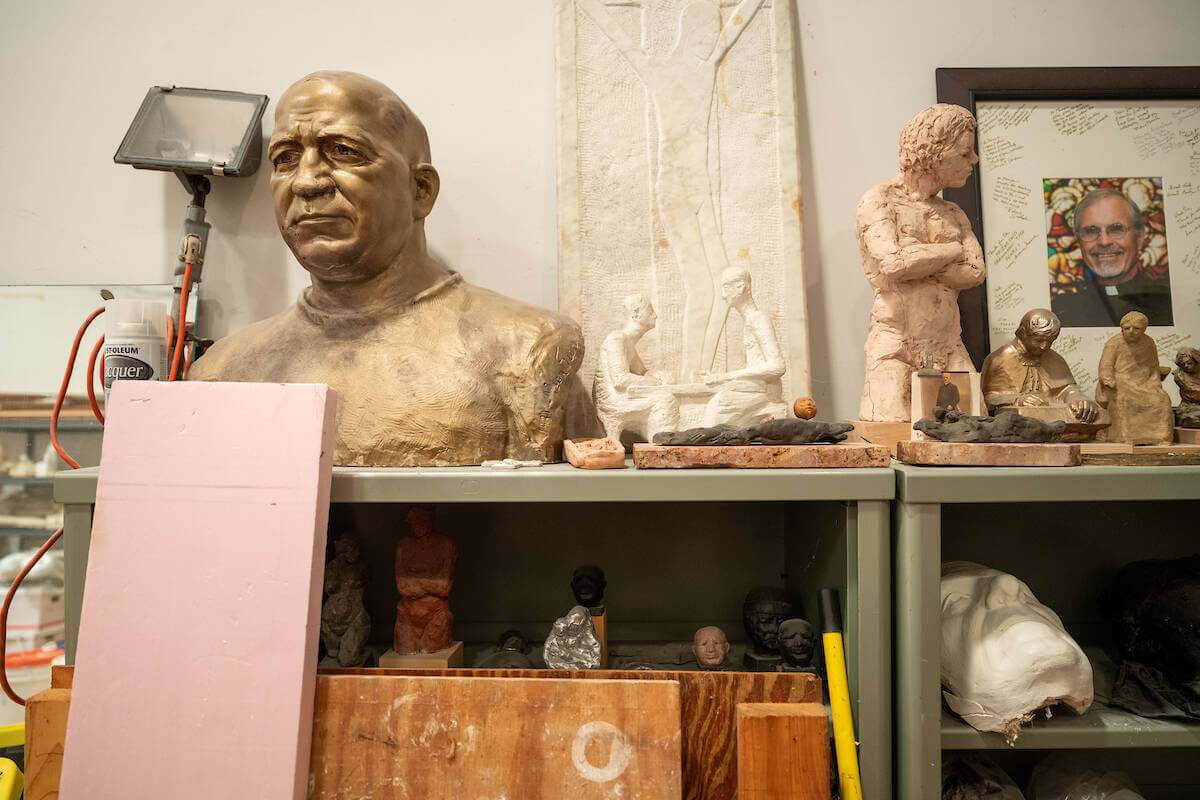
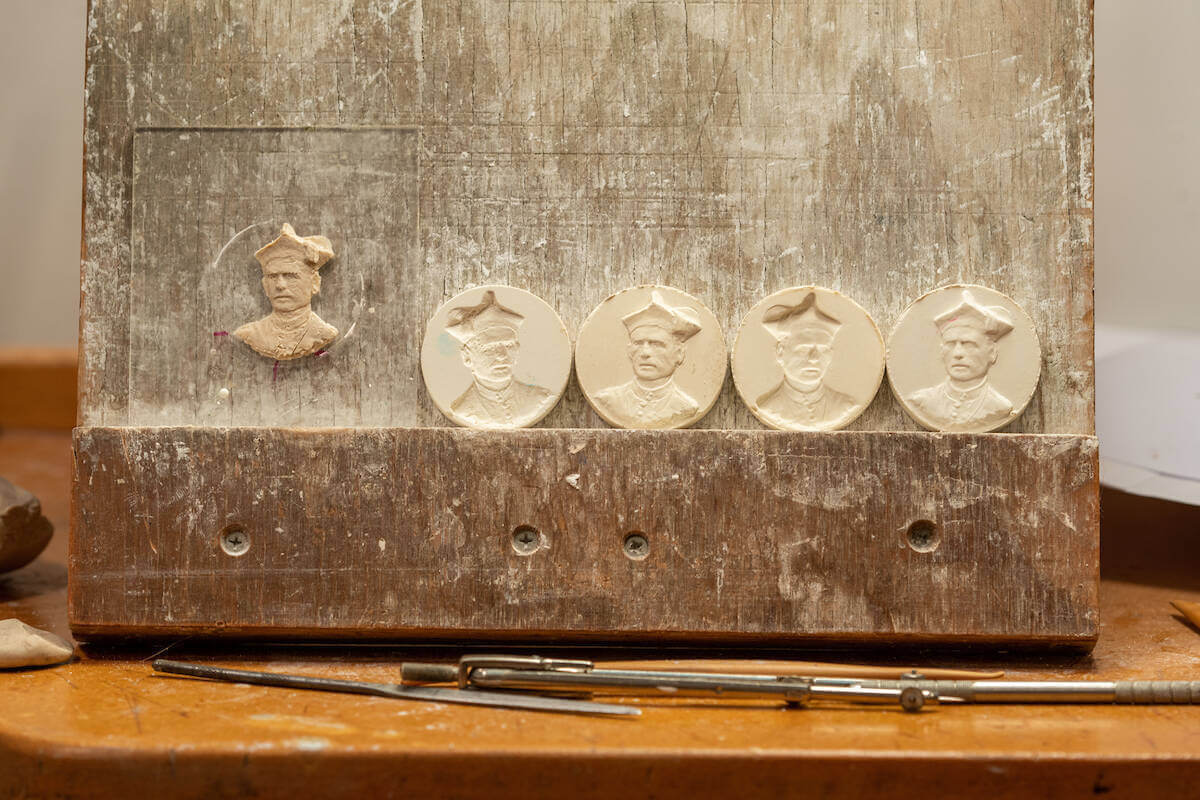
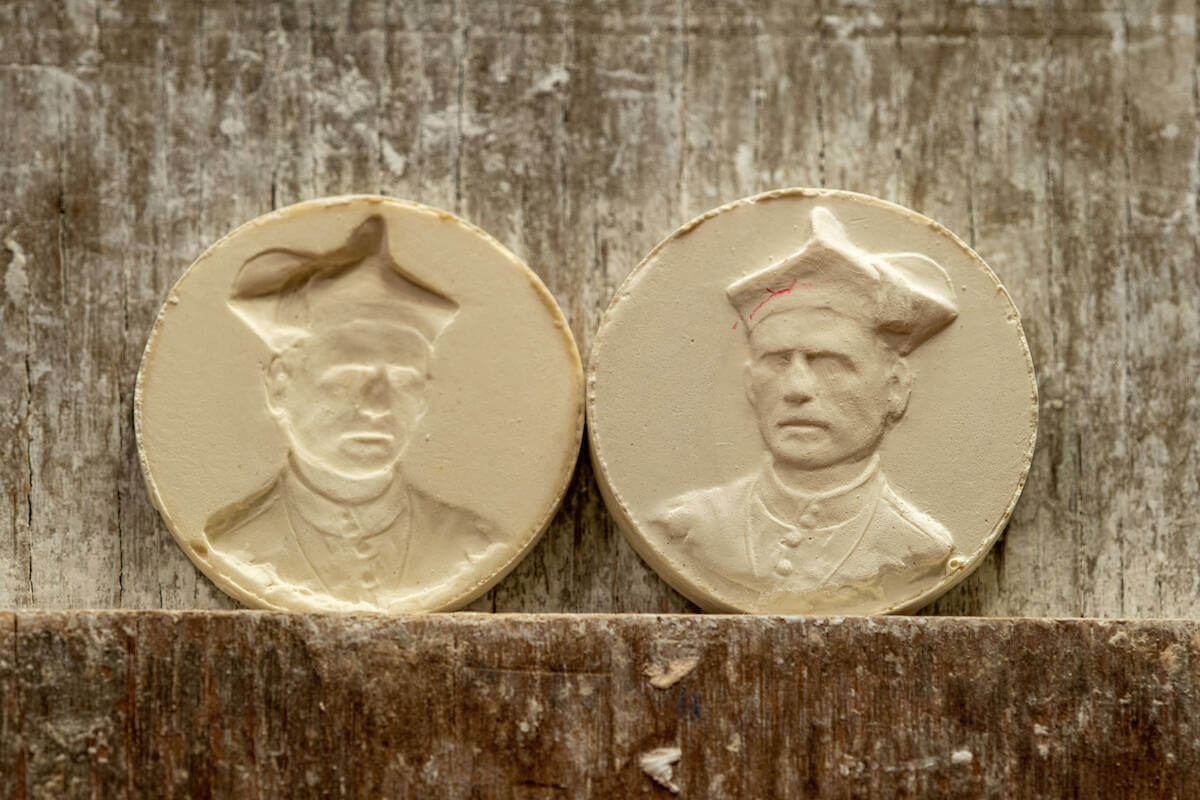
Deanna Csomo Ferrelltag:carriermedal.nd.edu,2005:News/1713152022-12-20T16:00:00-05:002025-04-02T13:23:20-04:00Shaping history: Notre Dame sculptor crafts medallion for Rev. Carrier Medal Sculptor Miklós Simon’s studio in the Holy Cross Annex building near St. Mary’s Lake is every bit what you’d imagine. It’s gritty, dusty and scattered with an almost macabre tableau of parts and pieces — of molds and busts perched in corners, of heads and hands resting on tables, of saints and priests peering from shelves high and low.
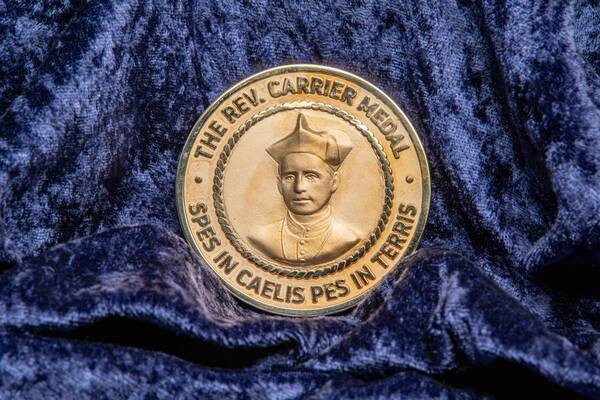
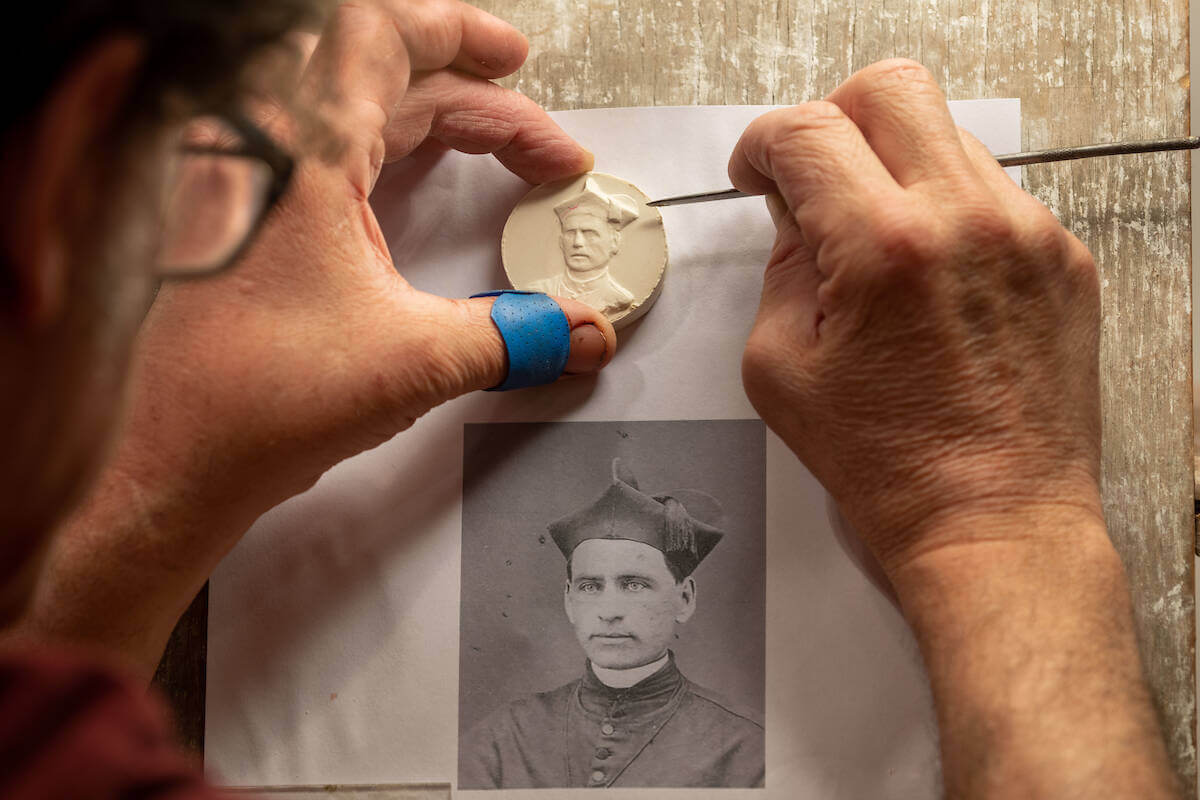
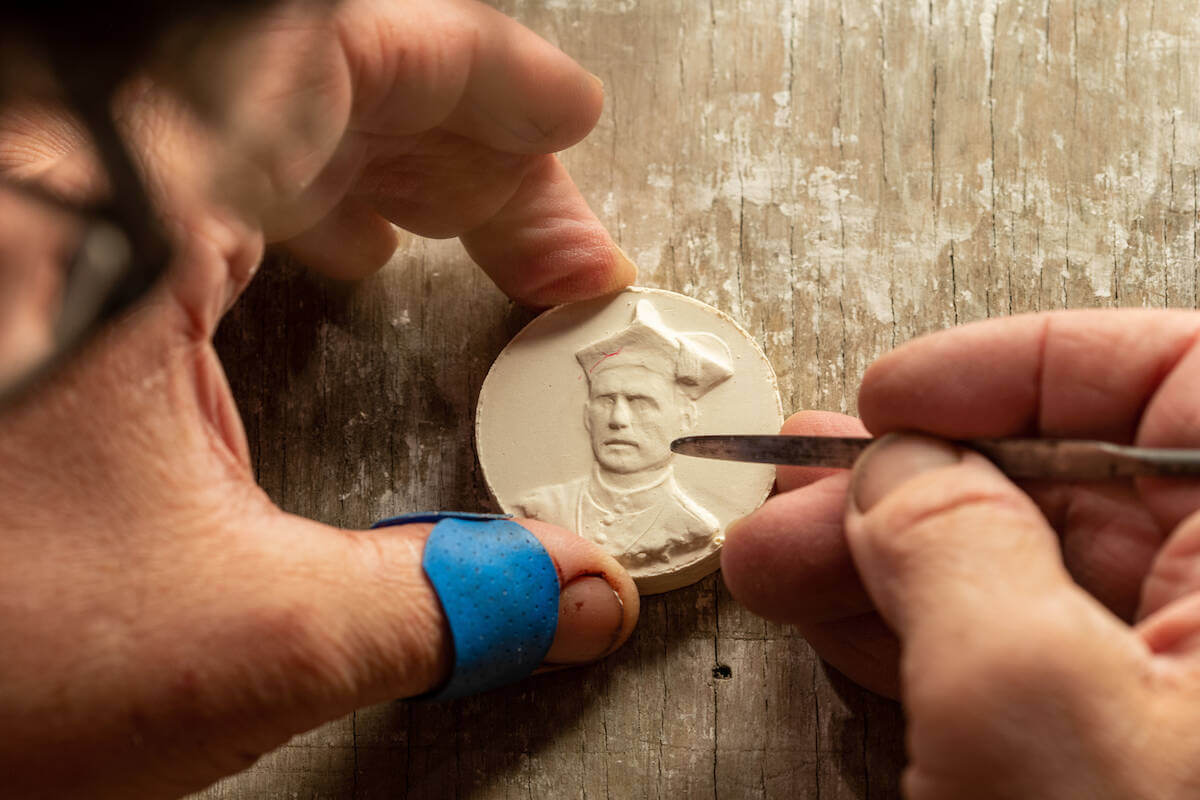
But in late October, a thin disk of white clay rested on an angled easel along one wall. Only 2.5 inches in diameter, the disk contained a delicately sculpted portrait of the first science teacher at the University of Notre Dame: The Rev. Joseph Celestine Basile Carrier, C.S.C. Father Carrier’s eyes and youthful jawline jut from the bas-relief sculpture — a type of sculpture created on a two-dimensional surface with features that don’t stand too far, reminiscent of a coin.
In 2022 Simon, a ’91 MFA graduate, was selected to create the medallion for the Rev. Joseph Carrier, C.S.C., Science Medal, the new award from the College of Science that honors world-class achievement in any field of science. Nobel Laureate Donna Strickland, a physics professor at the University of Waterloo, was awarded the inaugural Rev. Carrier Medal in November.
“When we saw examples of the other three-dimensional portraits Miklós had produced, he became the clear choice to create our Carrier Medal,” said Tammi Freehling, director of communications in the College of Science. “We could have worked with any number of vendors. But having the Carrier Medal created by Miklós, with his fine art approach to sculpting, makes the medal itself a work of art. And his long-standing connection to Notre Dame makes the medal that much more special.”
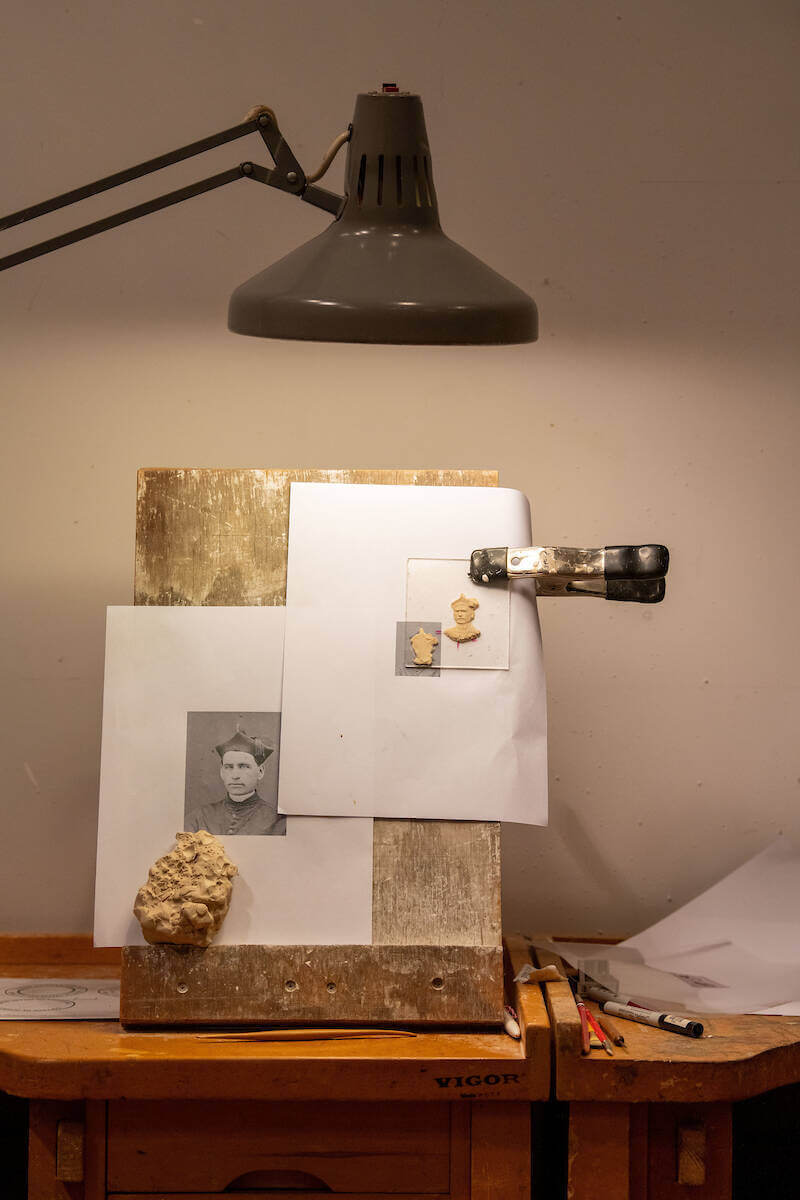
After he was commissioned for the piece, Simon dove into the project. Aiming to please — even though he has been sculpting professionally for decades and received hundreds of commissions and accolades — he quickly began the project by developing the medallion in clay.
“This will probably go through six versions between clay and plaster to refine it, adding the fine details of the eye and every detail,” Simon said. “As I work in the clay, I’m already thinking about what I have to change before we get to the plaster stage, which is a little more precise.
“I’m comparing the distance from here to here,” he explained, using a rounded needle sculpting tool to point from the bottom of the ear to the chin. “And the text is quite elaborate, so I will redo certain things on plaster.”
Art chose Simon
Simon was born in Zalaegerszeg, a city in western Hungary, and attended the School of the Arts at the University of Pecs in Hungary and the Academy of Fine Arts in Budapest before he immigrated to the United States. He earned a BFA degree from the School of the Art Institute of Chicago, and landed a competitive Riley Fellowship at the University of Notre Dame for his MFA.
But art chose him, rather than the other way around.
“When I was a kid, I found some river clay in gravel that was delivered for a building, and I basically picked it up and made an ashtray,” he said. “My aunt told me I’m going to be a sculptor, but I said, not even if I die will I be a sculptor.”
That didn’t stop him from joining the drawing club at school when he was 12, just two years away from a critical decision. Because schools in Hungary were divided by specialty, students decided upon future careers by age 14. He had considered chemistry, medicine and winemaking, along with art. When he interviewed at the art school and submitted his drawings, he was quickly accepted, and dove in with enthusiasm.
After completing his Bachelor of Fine Arts, Simon was accepted into the University of Chicago for his master’s degree. However, he noticed a flyer about applying to the University of Notre Dame for his degree instead, with the potential for a full scholarship. The prospect intrigued him. Simon wound up applying late, but the University allowed him to interview anyway.
Unfortunately, the day didn’t go as smoothly as planned.
“I got confused about the time change from Chicago, so I was an hour late, and I also went to Saint Mary’s by accident,” he said. “I was surprised to see all the women walking out of buildings, since I knew Notre Dame used to be an all-boys university not too long prior.
“So I ask where the arts building, Riley Hall, is and someone’s like, ummm … you have to go across the street,” he said, laughing at the memory. Despite the blunders, his interview went well and he was accepted.
Graduate years at Notre Dame
He loved his time at Notre Dame, describing courses in art history led by Kathleen Pyne, now professor emeritus, and Craig Adcock, now at the University of Iowa, as transformative. Pyne taught students that many in the world praise Euro-centric art traditions, while other cultural art traditions, including American art traditions, have often been dismissed. Through both Pyne and Adcock, Simon studied the works of important painters and sculptors including Hiram Powers, Daniel Chester French, Augustus Saint-Gaudens and Thomas Eakins, all of whom informed Simon’s sculptural style.
During the program he was advised by the late Rev. James Flanigan, C.S.C., associate professor in the Department of Art, Art History and Design, and Rev. Austin Collins, C.S.C., a professor of sculpture at Notre Dame who is also vice president for mission engagement and Church affairs. Simon sculpted the crucifixes for the altars at Knott and Siegfried halls as a first-year student, an honor he described as a humbling experience.
“Fathers Flanigan and Collins were both encouraging and supportive in my exploration of the sculpture medium, and furthermore guided my growth as educator in the field of art and sculpture,” Simon said.
During his third year, Simon was chosen as one of the artists to create a bas-relief for the United States Navy Memorial in Washington, D.C. Since graduating, he has taught and lectured throughout the world including at both of his alma maters as well as the University of Chicago and the Chicago Academy for the Arts, and he is currently an instructor in the Art and Art History Department at Columbia College, Chicago.
At Notre Dame, he’s kept busy with a variety of sculptures and reliefs that grace many of the buildings on campus beyond Knott and Siegfried halls, even including the Grotto. (There’s possibly a baby Jesus sculpture somewhere on campus with the face of Simon’s son as an infant, but we’re not telling.)
“He’s in great demand and is really a dedicated artist,” said Father Collins, who recommended Simon to Freehling during the artist search process for the College of Science. “It’s really hard to find a good figurative sculptor today, and he’s in that arena, doing high-quality, figurative artwork.”
Sculpting small
Though Simon has completed many large sculptures, small sculptural forms intrigue him just as much. For the Carrier Medal medallion project, Simon drew from his 28 years of experience as a freelance sculptor for the United States Mint.
“Not many people do this type of small detail work,” he said. “I’m not bragging, but it’s just the way it is; most sculptors don’t do this.”
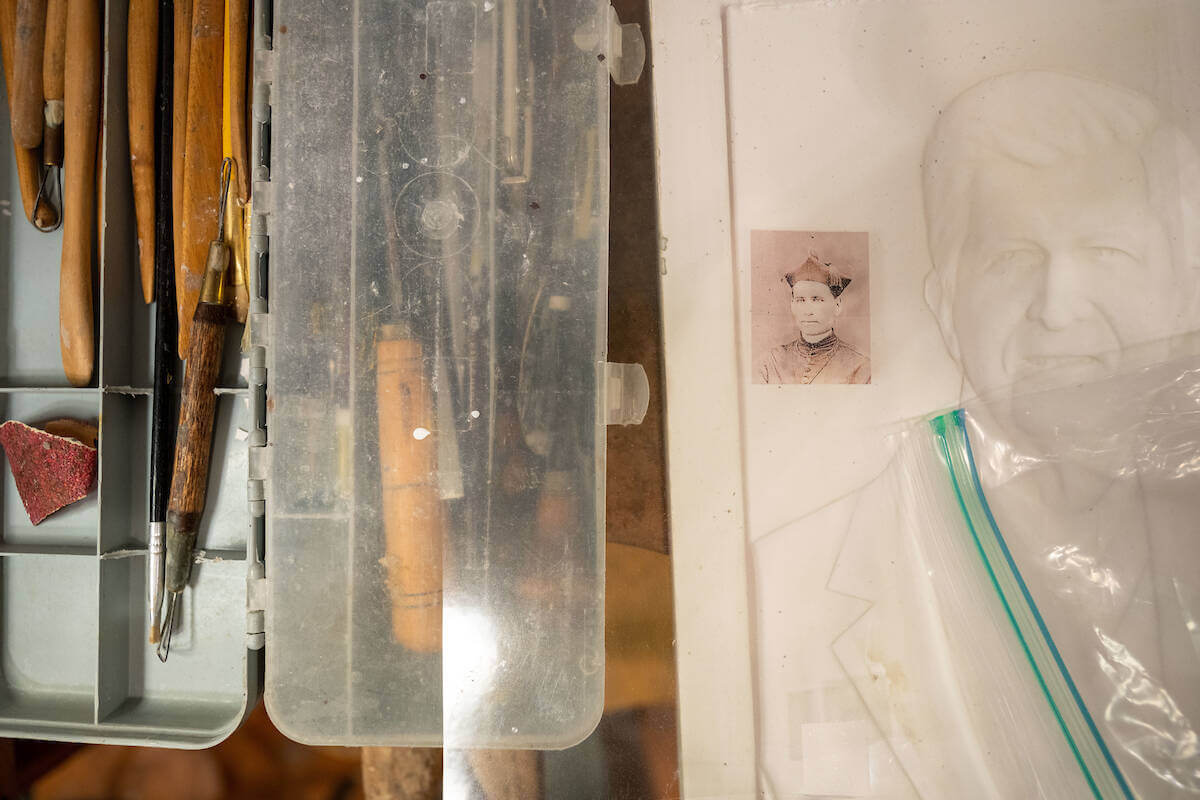
After building the medallion from clay, he created a plaster mold that he refined in both the positive and negative, because the medallion has dimension. He sent the final plaster sculpture to Dangios Fine Arts and Casting, in Chicago, to be cast in zinc with semi-precious gold plating.
Ten medallions were cast before the Carrier Medal ceremony; one was awarded to Strickland, and another given to Rev. Robert Dowd, C.S.C., religious superior of Holy Cross Priests and Brothers at Notre Dame, to acknowledge the Holy Cross order and their contributions to science at Notre Dame. The remaining eight will be awarded over the next eight years.
“The attention to detail is astounding — Miklós expertly translated Father Carrier’s portrait from a grainy black and white image to a three-dimensional relief portrait,” said Freehling. “The care and intricate detail put into the finished medal is more than we could have hoped for. And it will stand the test of time, being treasured by Carrier Medal awardees for years to come.”
Simon said that while he was honored to create the medallion for the College of Science, he enjoyed working with Lotta Barnes, the college’s visual communications senior assistant director, who envisioned the layout. While sculpture is an art, there’s science involved at nearly every turn, from the clay and plaster mixtures, to the tools used, to the final casting process.
“It is simply humbling to create a work which celebrates the history of our University and commemorates our pioneer faculty, and will be received by world-renowned scientists,” Simon said.
Originally published by Deanna Csomo Ferrell, College of Science at ndworks.nd.edu on December 20, 2022.
]]>
Deanna Csomo Ferrell, College of Sciencetag:carriermedal.nd.edu,2005:News/1691932022-11-21T13:00:00-05:002025-01-10T16:22:13-05:00From Fundamental to Functional: Nobel Laureate Donna Strickland accepts the inaugural Rev. Carrier Medal for her work in laser physics
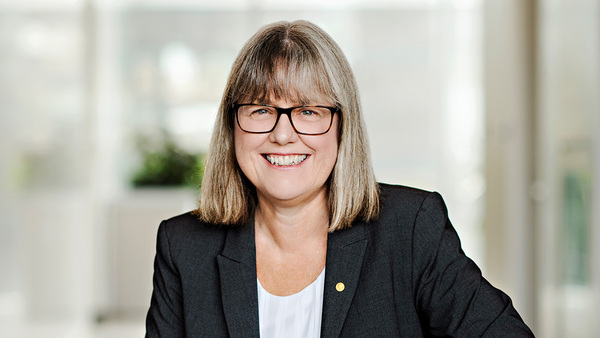
Donna Strickland, one of the winners of the 2018 Nobel Prize in Physics, occasionally gives Zoom interviews from her home in Canada. While one might expect her background to contain books or photos of colorful laser beams—she is, after all, a laser physicist—the only visible item (other than her smiling face) is a portrait of a white-bearded man with a furrowed brow.
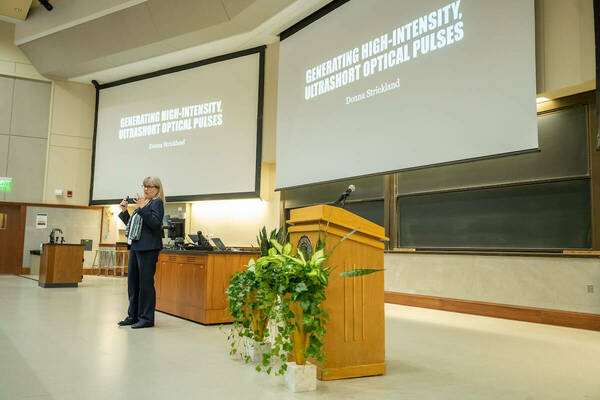
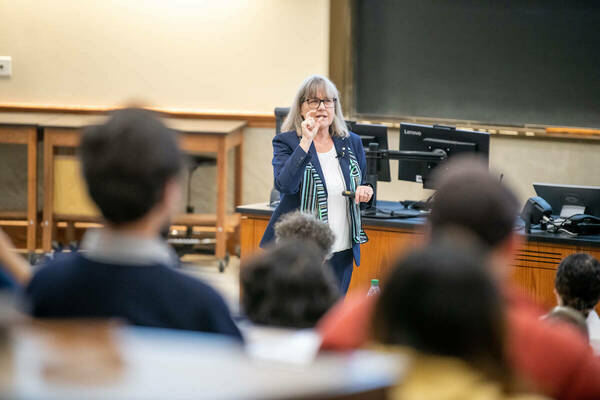
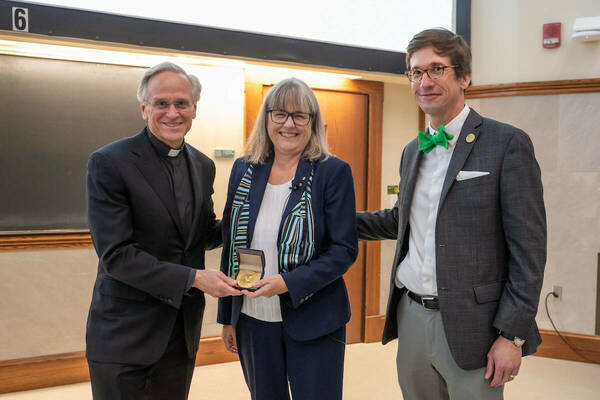
She might let an entire interview go by without mentioning her unique choice of backdrop. But not asking could omit a crucial bit of information about how Strickland views her successes and her career. The inaugural recipient of the Rev. Joseph Carrier C.S.C. Science Medal, Strickland accepted the award on November 3, 2022 in Jordan Hall of Science, and followed with a public lecture about her work.
“The reason I sit here, with this behind me, is this is a picture of the bust of Alexander Graham Bell,” she said before her visit. Her husband’s grandfather, Moses Wainer Dykaar, sculpted the bust of Bell in 1929, and it is now displayed in the Smithsonian American Art Museum along with another dozen sculptures of presidents, first ladies, and other American icons he crafted. Bell, a passionate teacher for the hearing impaired, invented the telephone in 1876 when he was only 29.
Unfortunately, he reportedly regretted his inability to create an even better invention as he aged. And that strikes a chord with Strickland.
At 26, Strickland, now a professor of physics at the University of Waterloo in Waterloo, Ontario, Canada, invented the process for which she and her research supervisor, Gérard Mourou, shared the Nobel. Chirped Pulse Amplification (CPA) has revolutionized laser research and paved the way for applications including LASIK eye surgery and cell phone glass. The Nobel came 33 years later, and she decided she would not lament any lack of future success like Bell did.
“I’m thinking, why do you have to ‘top’ the telephone, right?” she said. “We are still using telephones to this day.”
She outlined the CPA in her first published paper during graduate school at the University of Rochester in Rochester, New York. Though much has been made of the triumph of winning a Nobel based on her first published paper, she had been working diligently on projects that didn’t come to fruition, even as they informed the work that would lead to her future Nobel prize.
Science, as scientists know, is messy. There are no guarantees that hypotheses will be proven, and no guarantee that equipment won’t break. Failure is always an option.
“So I had a lot of failures, right?” Strickland said. “I remember one I feel bad about; I was given a senior student to work with, and he had been given this very special diode that had been made somewhere else to test, and I know that I destroyed it before he got any result.
“I felt very bad about that! Because that was supposed to be, I think, the culmination of his Ph.D. and showing what he could do with it, and I completely destroyed it.”
Of course, she had many successes during the course of her graduate work, and earned her doctorate from the University of Rochester in 1989. She worked in the laser division of Lawrence Livermore National Laboratory in California, beginning in 1991, on the opposite side of the country as her husband, Doug Dykaar, who had landed his dream job at Bell Laboratories. Within a year she joined the technical staff of Princeton University’s Advanced Technology Center for Photonics and Opto-electronic Materials.
When she accepted an offer to work as a professor at the University of Waterloo in 1997, her husband followed and took a series of industry jobs as she worked toward tenure. This wasn’t unexpected, because she was a teenager in the 1970s—at the height of the women’s liberation movement—and women at the time could dream about and plan for prominent careers.
In fact, though much is mentioned about the need for women to go into the so-called “hard sciences” like physics, math, or engineering, Strickland said she never thought much about it, noting that math and physics were the subjects she is best at. The first woman to have won the Nobel Prize in Physics was Marie Curie, in 1903, and even the second woman who won, Maria Goeppert-Mayer in 1963, had far fewer opportunities than Strickland had.
Rev. John I. Jenkins, Donna Strickland, and Dean Santiago Schnell
“Maria Goeppert-Mayer didn’t get paid for her physics work until she was almost in her 50s, which is just ludicrous,” Strickland said, noting that Goeppert-Mayer was initially forced to follow her husband from job to job and essentially work as a secretary, doing theoretical physics in her spare time. She finally landed a tenured physics position in 1946 at the University of Chicago. However, during the year of her Nobel-winning discovery, her faculty merit card showed she was rated “average” overall. The only item she scored well on was her “ability to get along well with others,” Strickland said.
“But I don’t think I’ve gotten different reviews because I’m a woman,” Strickland noted, describing how far women have advanced in the time since even Notre Dame began admitting women in 1972. “Women’s lib in the 1970s was more about the possibilities, and not the negativity we hear today.
“I don’t see how (negativity) is going to convince younger women to go into my field.”
During a September 2022 visit to her alma mater, McMaster University in Hamilton, Ontario, Canada (where she attended a street-naming ceremony in her honor, “Strickland Way”), Strickland discovered that women now comprise 40 percent of that university’s engineering class.
“I feel like we’re 80 percent of the way there, not worldwide, but we’re getting there,” she said. “But then you need to ask, how many indigenous students are there? It’s not going to be close to 5%, the percentage of the population.
“So I think it’s time to start putting efforts (for inclusive education) somewhere else, because if you look at the life sciences, it could be fun mining the statistics. For instance, where are the guys? Biology majors are 75 percent women.”
Regardless of which students go into which fields, however, Strickland said it’s important for the public to hear about science medals and commendations, including Notre Dame’s Rev. Carrier Medal. Many North Americans, in particular, do not appreciate the work of scientists, Strickland said. The large international prizes like the Nobel Prizes are naturally important, but the Carrier Medal is as well, because it localizes news of advancements in science, she said.
Those advancements include fundamental science, which is the foundation upon which other research is built. Her laser research was fundamental, but later led to corrective eye surgery for thousands of people worldwide, the ability for researchers to have tabletop lasers for their work, and for almost everyone to carry cell phones with carefully laser-cut glass screens in their pockets.
“We need more people locally to understand the role of science and society, because it’s not necessarily the specific science someone did, but maybe in 20 or 30 years, the work will lead to something people will use,” she said.
Just like Bell’s telephone invention.
At first, many regarded his work as little more than a novelty, but the technology spread during the next 10 to15 years. By 1890, there were three telephones for every thousand people. By the mid-1902s, there were enough telephones for one in five. Certainly that’s an invention to have zero regrets about not surpassing.
So even as Strickland continues her work with lasers, including a current project that could lead to more precise excision of tumors—possibly negating the need for radiation treatment—she won’t complain if her present and future work doesn’t exceed her Nobel Prize-winning research.
“I say, look, I am not going to try and top the CPA,” Strickland said. “I’m going to be happy my whole career, my whole life, that I got that opportunity to work on it.”
Originally published by Deanna Csomo Ferrell at science.nd.edu on November 21, 2022.
]]>
Deanna Csomo Ferrelltag:carriermedal.nd.edu,2005:News/1691922022-10-13T13:00:00-04:002025-01-10T14:49:08-05:00College of Science introduces Rev. Joseph Carrier, C.S.C., Science Medal; Nobel laureate Donna Strickland first recipient
The University of Notre Dame College of Science has introduced its Rev. Joseph Carrier, C.S.C., Science Medal to recognize sustained, outstanding achievements in any field of science. The medal will be awarded annually, alternating between the mathematical, physical, chemical and biological sciences, and will be accompanied by a monetary award.
The Rev. Carrier medalist will be invited to give a public lecture on campus as part of the award presentation.
The medal is named after Rev. Joseph Celestine Basile Carrier, C.S.C., who is recognized as the first director of the science program at the University in 1865, when the College of Science was established as a department.
“In creating the Rev. Carrier Medal, we will honor world-class achievement in the sciences and inspire Notre Dame students to strive for the same level of greatness as that of Father Carrier and our medalists,” said Santiago Schnell, the William K. Warren Foundation Dean of the College of Science.
Father Carrier was born in France in 1833 and was interested in the natural sciences from an early age. He immigrated to the United States, joined Notre Dame in 1860 and was ordained in 1861. He solidified the science program at the University, which at that time was a six-year program that included two preparatory years and four collegiate years.
The inaugural Rev. Joseph Carrier, C.S.C., Science Medal will be presented in November to Donna Strickland, who won the Nobel Prize in physics in 2018.
Strickland, a professor at the University of Waterloo in Ontario, will accept the award and present a lecture at 3:30 p.m. Nov. 3 (Thursday) in Room 105, Jordan Hall of Science. The event is free and open to the public.
Strickland was awarded the Nobel Prize for her part in inventing a technique called chirped pulse amplification, which has allowed doctors to perform corrective eye surgery and manufacturers to cut glass for cellphones. She shared the 2018 prize with her doctoral adviser, Gérard Mourou, for work they published in 1985 while she was at the University of Rochester in New York.
“Professor Strickland has changed modern science and helped to revolutionize laser physics,” Schnell said. “Thanks to her discoveries, laser technology allows humanity to tackle new and challenging scientific and technological problems. We are now able to explore complex interactions between light and matter, accelerate atomic particles or develop new sources of radiation to treat cancers. We are very pleased that she has agreed to accept our inaugural Carrier Science Medal and look forward to her lecture.”
Strickland was the third woman, after Marie Curie in 1903 and Maria Goeppert Mayer in 1963, to win the Nobel Prize in physics. Andrea Ghez later won the prize in 2020.
Strickland’s Nobel-winning research was outlined in her first-ever scientific paper. She began work at the University of Waterloo in 1997 after working as a research associate at the National Research Council Canada, as a physicist at Lawrence Livermore National Laboratory and as a member of the technical staff at Princeton University.
In addition to the Nobel Prize and Carrier Medal, Strickland has received the Sloan Research Fellowship, a Premier’s Research Excellence Award and a Cottrell Scholar Award. She received the Golden Plate Award from the Academy of Achievement and holds numerous honorary doctorates.
Strickland is a fellow of the Royal Society of Canada, a Companion of the Order of Canada, and a member of the National Academy of Sciences. She is also an honorary fellow of the Canadian Academy of Engineering and the Institute of Physics.
An annual call for nominations for the Carrier Medal will be open to national and international senior scientists. Any candidate nominations will remain valid and shall be considered by the award selection committee throughout three nomination cycles. Teams or groups may be nominated for this award as well. See the College of Science website for more information about the Carrier Medal.
Originally published by Deanna Csomo Ferrell at news.nd.edu on October 13, 2022.